Stable Name Studio · buyer guide
Registered names and barn names on one plate
For worldwide Stable Name Studio orders, give the registered name and barn name distinct roles, then proof both in the exact layout the horse owner approves. A registered name can identify the horse formally, while a barn name may be the familiar name used in daily conversation.
Reviewed 2026-09-05 · AI-assisted editorial review. General buying guidance; illustrative scenarios are not customer case studies. Images are AI-generated concepts.
Ask the owner which forms they want on the plate and which should be most prominent. Do not assume the longer name is always the headline or that the shorter name is merely decorative. A working stable sign may prioritize quick recognition by a familiar name, while a personal show keepsake may emphasize the approved formal name. State that intended use before arranging the lines. The two names should complement each other without making a reader wonder whether the plate refers to two different horses.
How do you confirm the exact registered name with the owner?
Ask the owner to supply the approved spelling, spacing and punctuation of the formal name. Do not infer it from a partial show listing, a cropped photograph or a similar horse’s record. Keep prefixes, suffixes and distinctive spelling as supplied until the authorized reviewer approves a change.
A plate order should not become a search exercise in which the designer chooses the most plausible identity. If the owner is still confirming the name, mark that field on hold while discussing the layout with a clearly labeled placeholder. The final engraving file should contain the approved result, not a reference that someone expects production to correct from memory.
Southern Accent Woodcrafting distinguishes registered and barn-name lines.
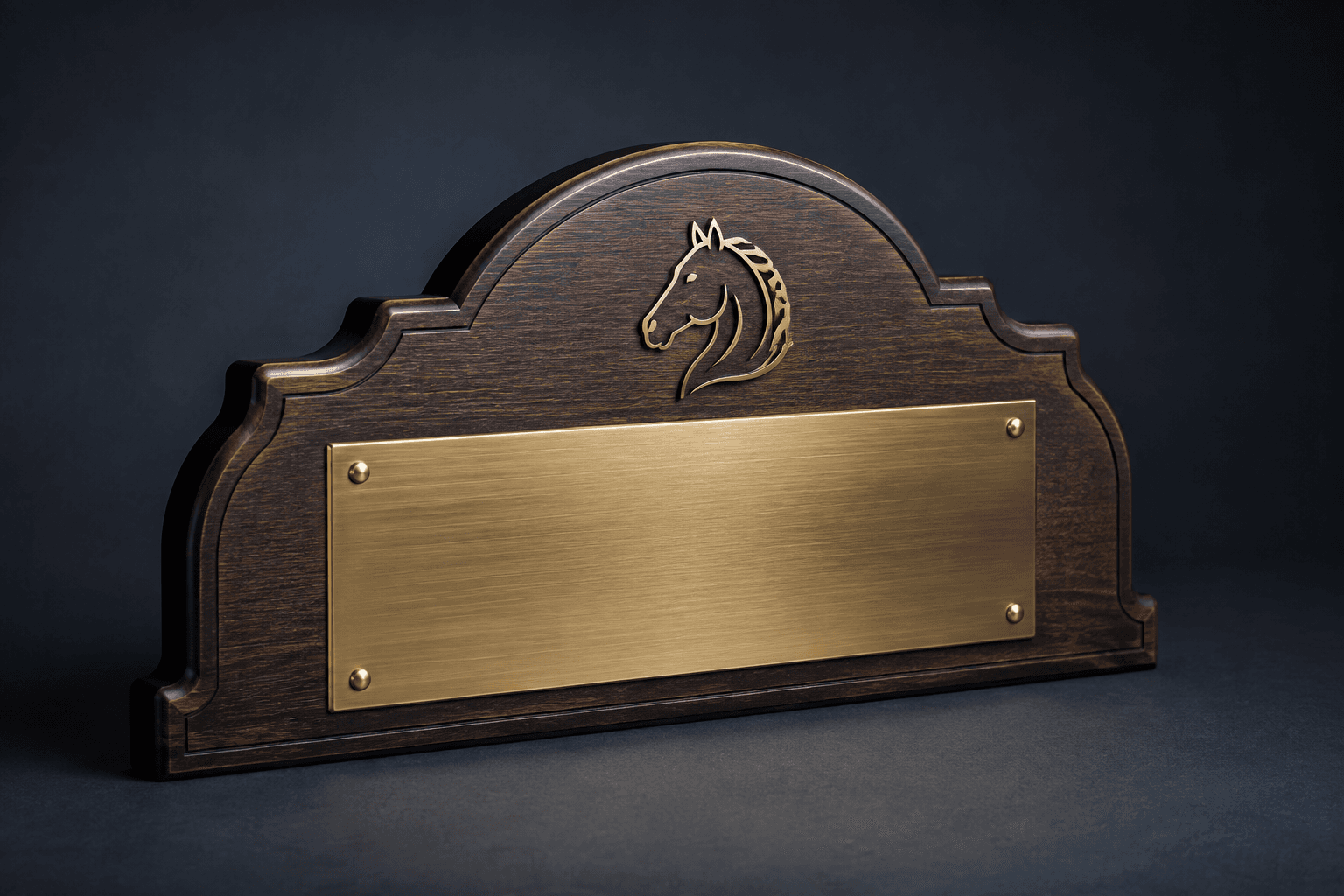
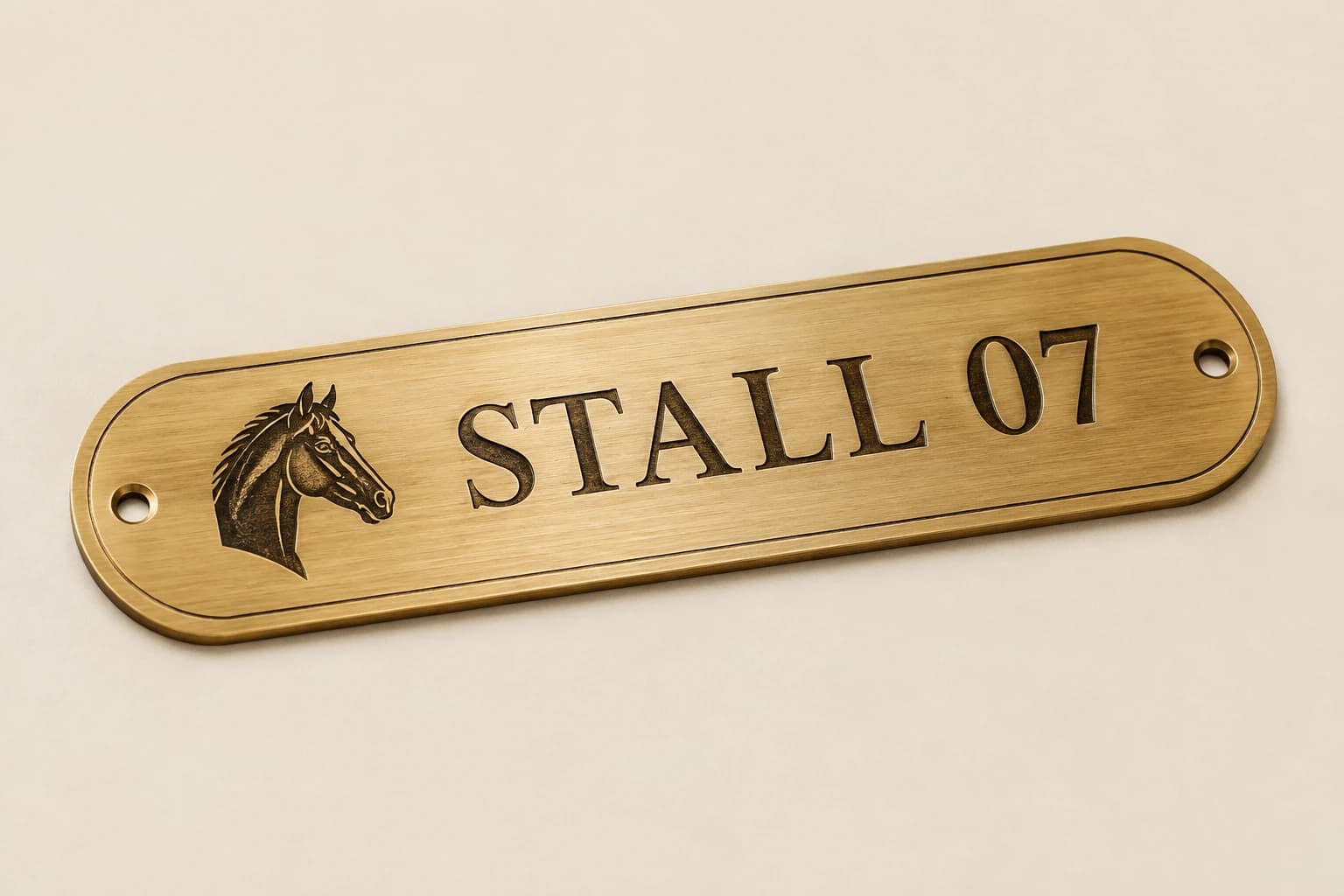
Sources: Southern Accent Woodcrafting: Personalized Horse Stall Sign with Horseshoes
How do you treat the barn name as a deliberate display choice?
A nickname may have unusual capitalization or an affectionate spelling that software does not recognize. Preserve the owner’s exact preference through the proof. Ask whether quotation marks, a label or simple spacing should distinguish it from the registered name. Those are layout choices rather than mandatory naming rules.
If the barn name is shared by more than one horse at the stable, the manager may want an additional approved location cue in the sign system, while the owner’s nameplate still retains its preferred wording. Do not add private owner information automatically to resolve the ambiguity. Keep the horse identity, physical stall and contact records in their appropriate roles.
How do you compare the full two-line hierarchy at actual size?
Show the complete registered and barn names together in the proposed physical area. A large familiar name with a smaller formal line can work differently from equal-size lines, so ask the owner to review both if the hierarchy is undecided.
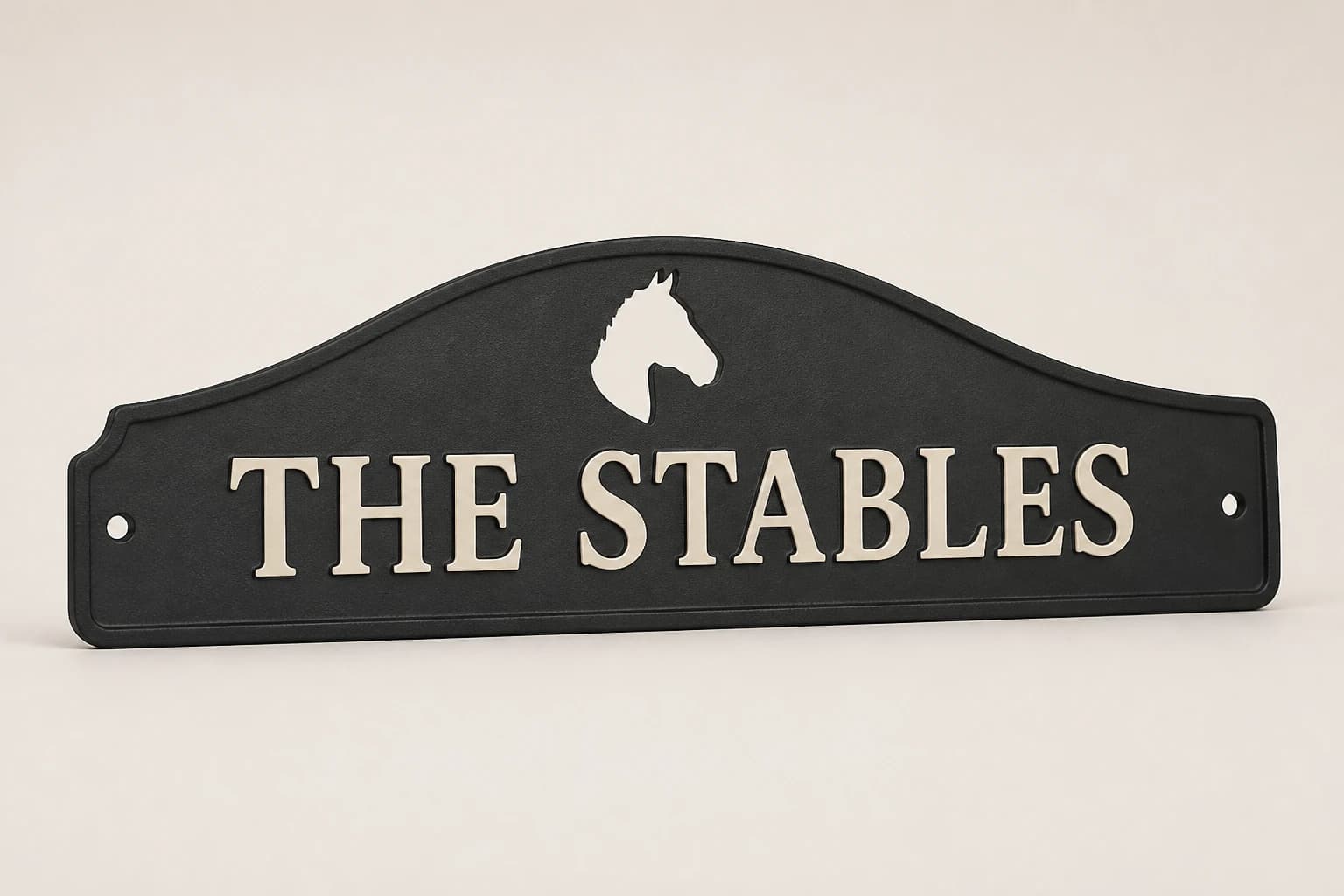
Do not evaluate each name in isolation on an enlarged screen. The longer line may determine the usable format, especially when a decorative motif also occupies the plate. If it is crowded, consider an approved alternate line arrangement or a different component size. Shortening the formal name should not be an automatic response to a character budget. The text tool can identify line lengths, but the actual font and engraving area still need review.
How do you decide whether an owner or achievement line belongs?
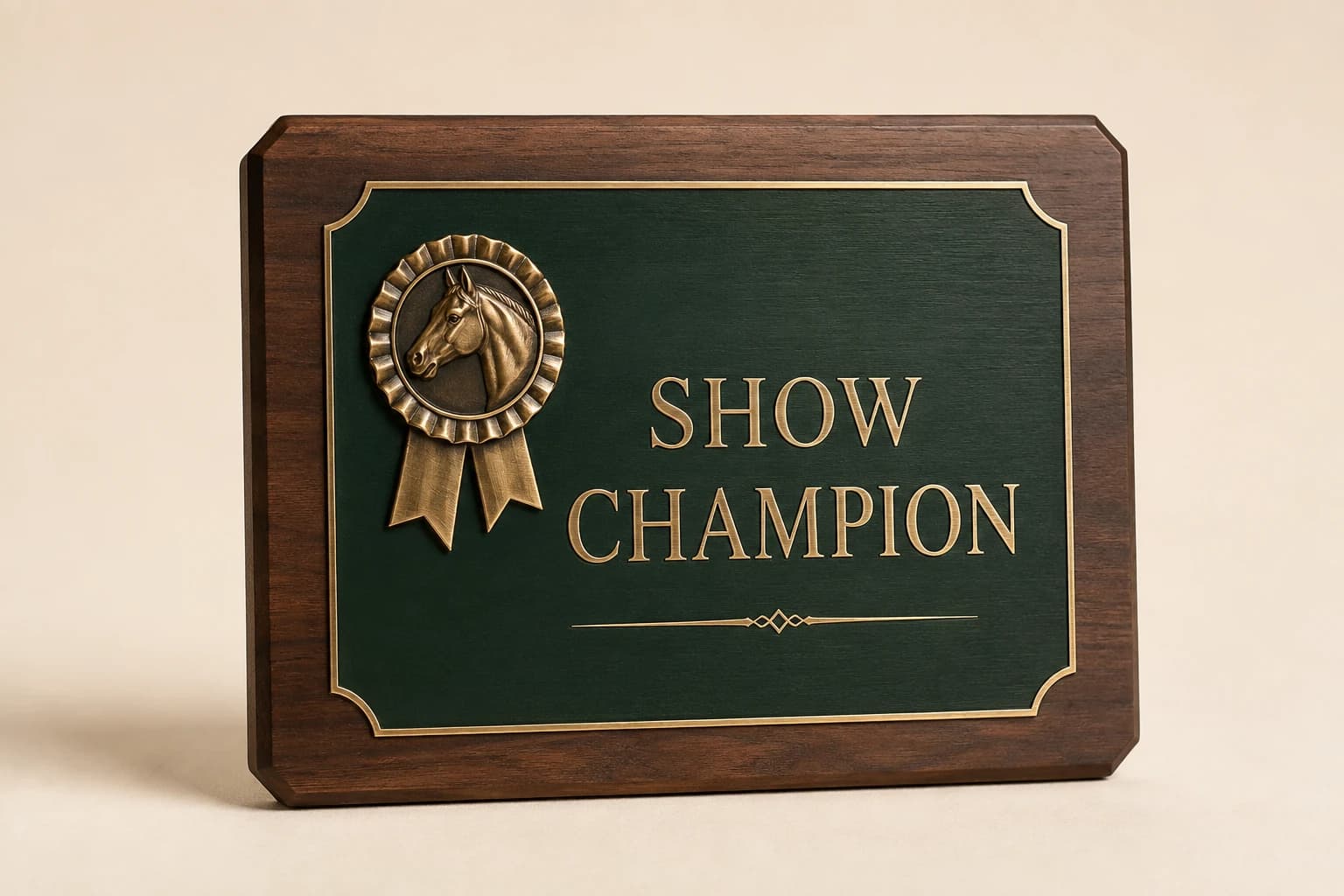
A third line may name an owner, identify a stable or mark a specific show result, but it should have a clear purpose. Ask whether it improves the plate’s intended use or merely fills space. An owner name can change while the horse’s identity remains the same, so consider how that affects reordering or transfer.
An achievement line requires its own approved wording and should not be inferred from a decorative trophy concept. Keep optional text separate until the owner decides it belongs. The plate should not become an unverified biography because the order form offers another field. A concise identity design can remain more useful across changes in location or ownership.
Plan registered names and barn names on one plate
Load the fictional example, then replace its inputs with the reviewed details for your project.
Method: Count visible characters, spaces and punctuation by line and compare with the user-entered line budget. Counts do not establish physical fit or factual accuracy.
Build your plan
Counts include spaces and punctuation. Character count cannot establish physical fit: font, script, layout, material and engraving area require a proof at actual size.
Use the article’s example files
Sample rows are illustrative and are not production instructions. Replace their assumptions, keep private records separately and complete the approval fields before using the sheet for a real order.
How do you review punctuation and script through the final proof?
If either name uses accents, another script or unusual characters, have an authorized reader inspect the rendered output rather than only the typed source. Confirm that the font displays the intended characters and that line breaks preserve the name. A character counter may treat a visible symbol correctly for counting without proving it can be reproduced in the chosen process.
Keep the exact text file with the approved artwork. If the designer proposes a typographic substitution, make it visible to the owner instead of treating it as a routine correction. A small punctuation change can be meaningful in a formal name even when it seems visually minor.
How do you preserve both names in the reorder record?
Save the registered and barn names as separate approved fields along with the final hierarchy and component reference. A later replacement can then reproduce the intended pair without reconstructing it from a photograph. If the owner requests a changed barn name, review whether the formal line remains unchanged and issue a new complete proof.
If the horse moves to another stable, do not automatically add the new location to a personal nameplate unless that is part of the new brief. The retained record should explain which words identify the horse and which, if any, describe a particular owner, occasion or location. This keeps future copies accurate without making the original design inflexible.
How does the illustrative registered names and barn names on one plate example work?
A fictional owner supplies Moonlit Harbor as the registered name and Harbor as the barn name. The proof uses two separate lines so the formal identity and familiar name remain clear. The owner reviews the complete hierarchy before adding any stable or owner line.
These names are illustrative and do not refer to a verified registered animal. Enter Moonlit Harbor and Harbor on separate lines. Moonlit has seven characters, its separating space adds one and Harbor has six, making fourteen on the first line. The second line contains six. The total is twenty across two lines, with a longest line of fourteen. Both are within a chosen 24-character budget. This checks the fictional name pair, while the owner still approves identity accuracy and the actual physical hierarchy.
Barn-name-led plate or Registered-name-led plate: which fits this order?
Choose this when the familiar name is the main identification cue for the intended stable audience. Choose this when the formal identity is central to the personal or show-related use. Does the secondary registered line remain complete and readable at the proposed size?
| Option | Barn-name-led plate | Registered-name-led plate |
|---|---|---|
| Best reason to choose it | Choose this when the familiar name is the main identification cue for the intended stable audience. | Choose this when the formal identity is central to the personal or show-related use. |
| Main review question | Does the secondary registered line remain complete and readable at the proposed size? | Is the full registered wording confirmed, and is the familiar name clearly distinguished? |
| What to specify | Specify the exact barn name, formal name and approved visual hierarchy. | Specify the owner-approved formal name, barn-name treatment and any separately approved context line. |
| Later change | Keep the approved wording and component reference so any later revision can be requested against a known record. Do not assume a photograph alone can recreate the original. | Record which parts remain the same and which would be replaced or updated. Ask for a specific later-change proposal rather than relying on an unconfirmed assumption of interchangeability. |
What should you confirm before ordering?
These Stable Name Studio answers address registered names and barn names on one plate. Confirm the final wording, component scope and receiving plan in the written proposal. The illustrative worksheet explains the planning calculation; it does not approve the production design or replace the reviewer responsible for this order.
What affects the price of a two-name horse plate?
For Stable Name Studio, the complete plate size, construction, text treatment, artwork, support and destination shape the proposal. A long registered name can require a different layout from a short barn name. Supply both exact strings before quoting the design, and confirm any minimum or separate artwork work without assuming that another seller’s character allowance applies.
Which name should be largest on the plate?
Choose the hierarchy for the intended use. A working stable audience may rely on the familiar barn name, while a personal or show-related piece may emphasize the approved registered name. Review both in the actual physical layout rather than treating one convention as mandatory. The owner should approve the final relationship between the lines.
Can the designer shorten the registered name?
Ask the owner to approve the exact display form. Prefixes, suffixes, spacing and punctuation may be part of the intended formal identity. A designer can propose another layout or size, but should not silently remove words to meet a text budget. Keep the full approved name separate from any authorized shortened version.
Do barn names need quotation marks?
Use the owner’s preferred treatment after reviewing the full layout. Quotation marks, a label or simple spacing can distinguish a familiar name, but none is an automatic requirement of this order. Preserve unusual capitalization and spelling deliberately, and make sure the two lines are understood as names for the same horse.
Should the owner’s name always appear underneath?
Add it only when it serves the approved purpose and the owner wants it displayed. Ownership and stable location may change while the horse’s identity remains the same. Keep an optional third line separate during review so a convenient form field does not create an unnecessary personal identifier or an inflexible future replacement.
Sources and scope
The sources below support the cited technical details. The ordering workflows are editorial recommendations. Your project specification, price and schedule are established in the written quote and approved proof.
- Southern Accent Woodcrafting: Personalized Horse Stall Sign with Horseshoes · checked 2026-09-05
Which buying guide should you read next?
All buying guidesFor worldwide Stable Name Studio orders, keep the stall’s permanent location identity separate from the horse name that may move with its occupant.
For worldwide Stable Name Studio orders, order an insert for the measured stable holder, not for an assumed standard size suggested by its appearance.