Stable Name Studio · buyer guide
Nameplates for existing stable holders
For worldwide Stable Name Studio orders, order an insert for the measured stable holder, not for an assumed standard size suggested by its appearance. An existing stable holder is part of the specification, not merely a background in the product photograph. Record its location and any known manufacturer or component reference before asking for a replacement insert.
Reviewed 2026-09-05 · AI-assisted editorial review. General buying guidance; illustrative scenarios are not customer case studies. Images are AI-generated concepts.
Similar-looking holders can differ in opening size, depth or how the plate is retained. State whether the request replaces a damaged nameplate, changes a horse name or adds an insert to an empty holder. Those jobs may share a physical interface while requiring different text approval. The supplier should be able to connect the proposed insert to a particular holder rather than guess which standard rectangle the barn usually uses.
SmartEquine describes a stall nameplate supplied with a holder for changing plates.
Sources: SmartEquine: Stall Nameplate - Plastic
How do you measure the opening and the proposed insert separately?
Record the holder’s usable opening, the visible area and any limits affecting the insert’s overall size or thickness. If an existing plate can be measured appropriately, distinguish its dimensions from the holder dimensions. Use consistent units and label estimates. A ruler in a photograph can help explain the interface but should accompany written values.
Ask the responsible supplier what measurements the actual construction needs. Do not assume a face dimension alone establishes fit. The barn manager and appropriate specialist should review any removal or attachment question before the existing assembly is altered. The buyer’s task is to provide accurate conditions for a compatible proposal.
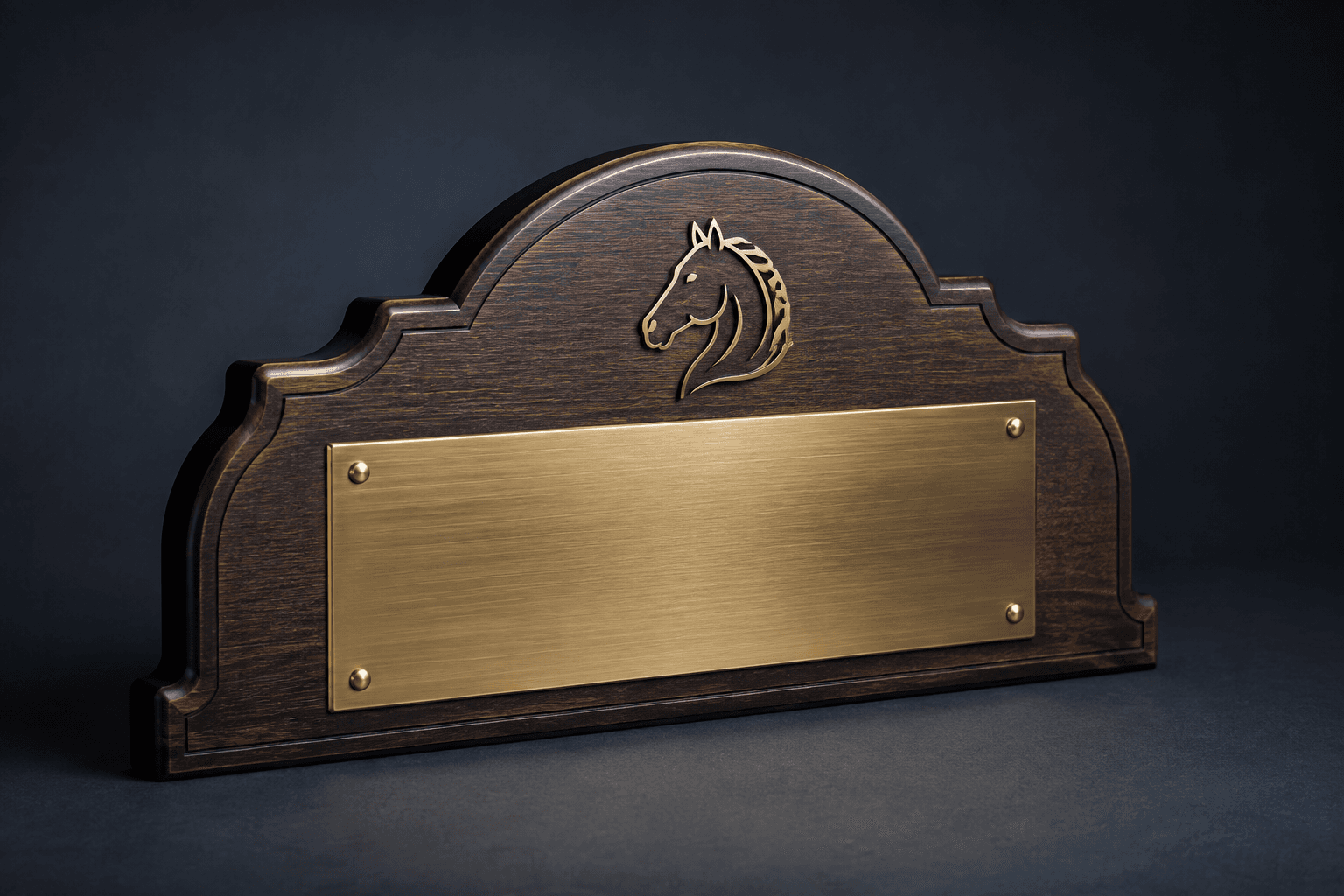
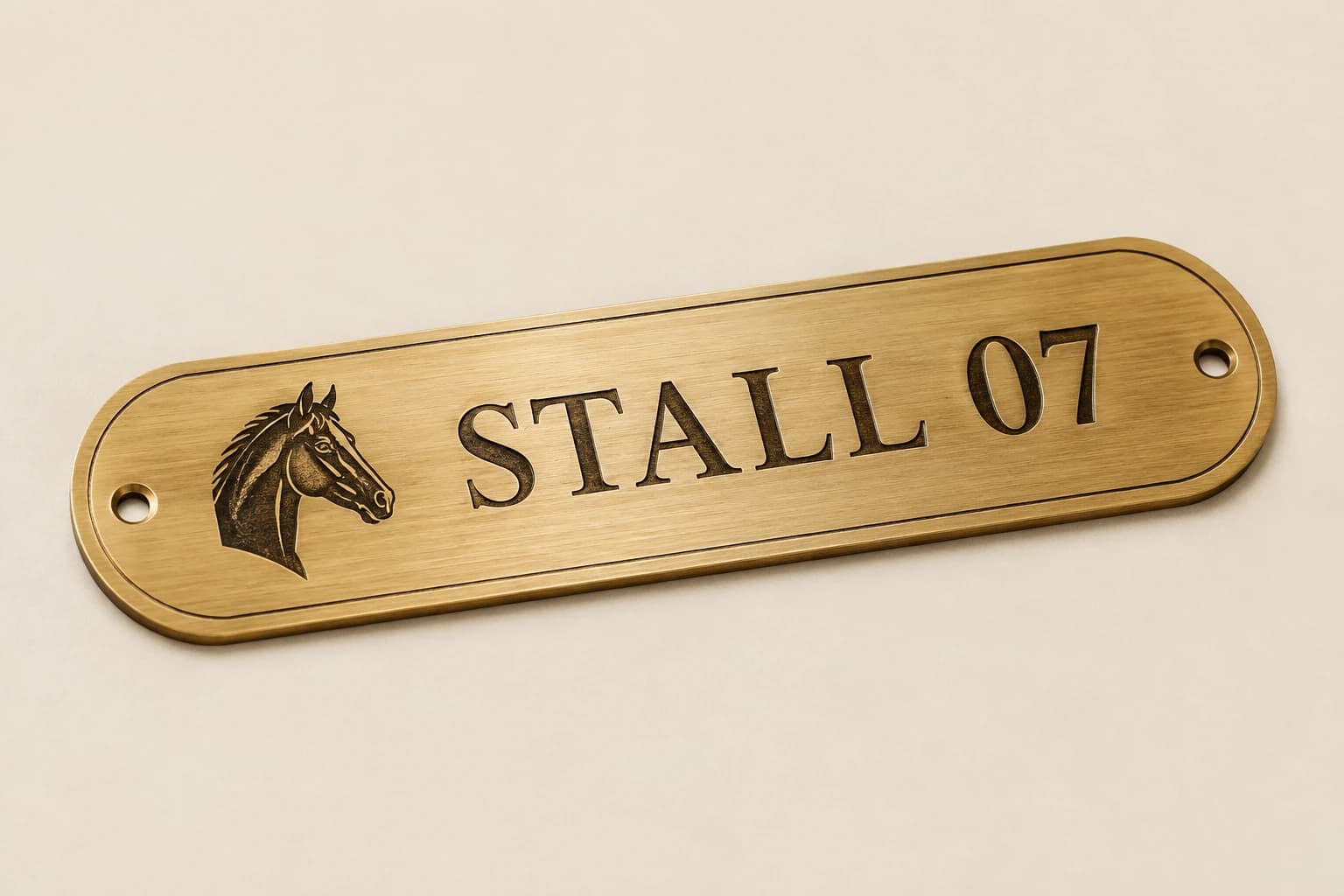
How do you check whether every holder in the batch matches?
Inspect each distinct holder group rather than measuring one and applying it to the whole barn. Repaired stalls, newer additions or equipment acquired in different years may use different components. Give each confirmed type a reference and assign its locations to that group.
If two holders appear similar but have not been checked, keep their equivalence provisional. A bulk order can still be efficient while containing several measured insert types. The worksheet should show which drawing covers each row so a successful fit in one holder is not treated as proof for another. This is especially useful when the same horse name needs plates for several locations.
How do you separate visible text area from hidden edges?
A holder may cover part of an insert’s edge or create a visible window smaller than the full plate. Show that area in the proposed layout so a name is not positioned where the holder obscures it. Ask the owner to review the exact horse name within the visible area, not only on a standalone rectangle.
A long registered name and a short barn name can require different hierarchy choices. Keep any decorative border inside the reviewed visible region if it is intended to be seen. The physical insert can fit while the inscription is poorly positioned, so compatibility and readability need to be checked together.
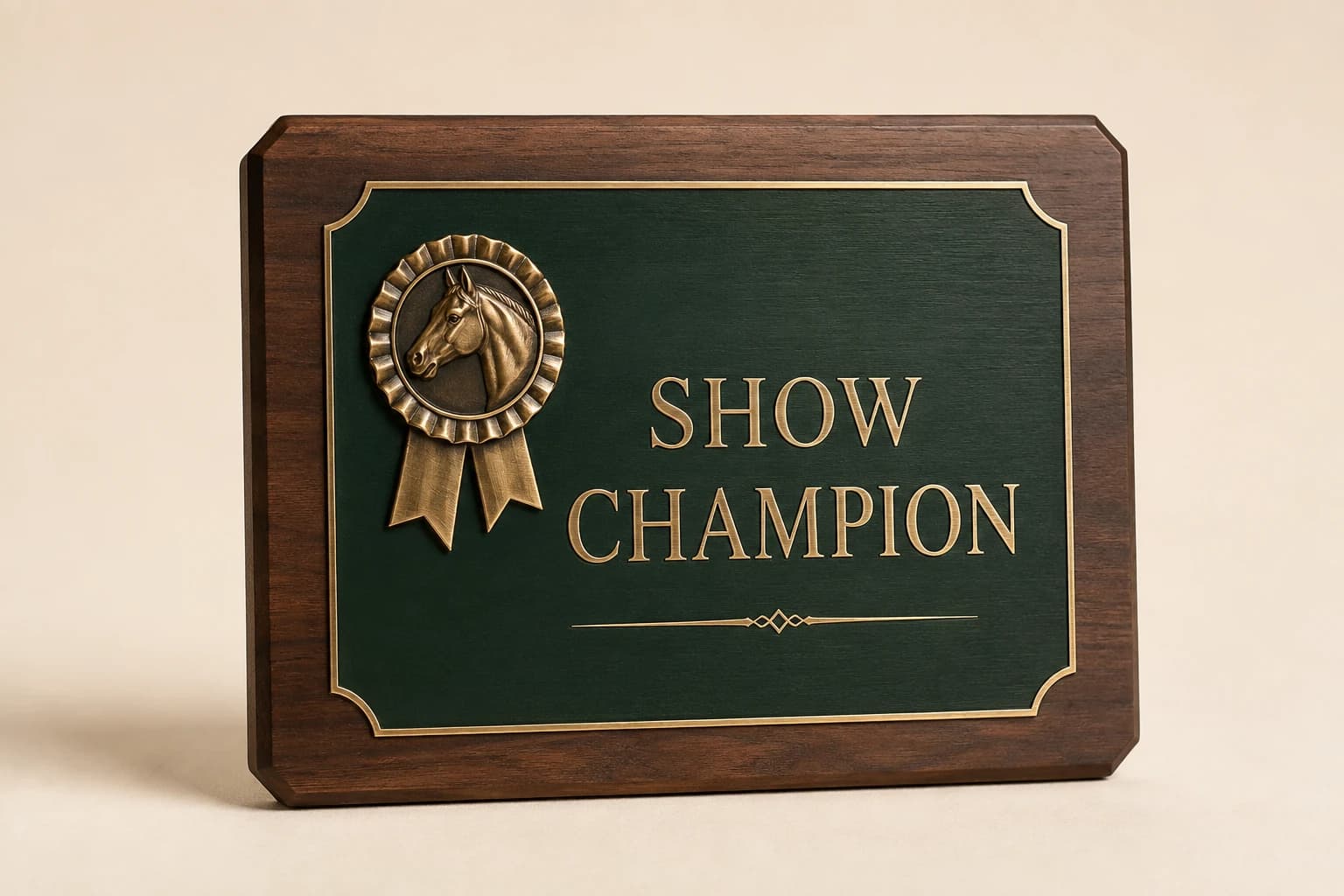
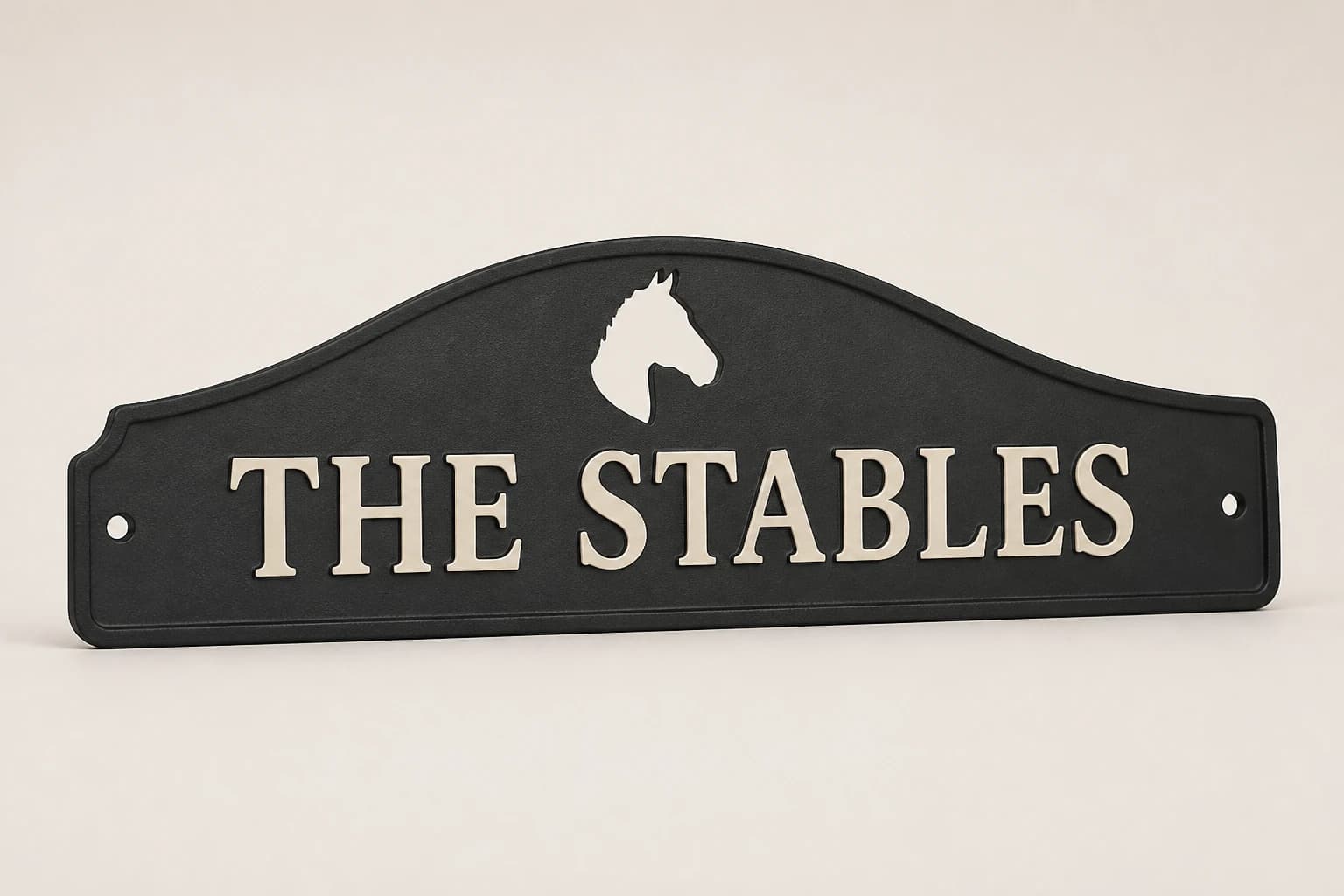
How do you describe the barn conditions for the actual component?
Tell the supplier where the holder is used, the exposure conditions and the routine cleaning context the manager wants considered. Do not assume a material is suitable merely because it is described as a stall nameplate elsewhere. Ask for the proposed construction against those actual conditions and identify any specialist review needed for placement.
This guide does not specify universal fasteners, adhesives or animal-handling arrangements. If the holder itself is damaged or unsuitable, a new insert may not solve the underlying problem. Have the responsible manager decide whether the project is an insert replacement or a broader holder-and-plate change before the order is released.
How do you use a targeted fit review for the uncertain holder?
Where the interface is uncertain, ask for a reviewed sample or another specific verification step appropriate to the proposal. Choose the holder that best represents the unresolved constraint, such as the tightest opening or a different retaining detail. Record which group the result covers.
Do not describe one successful example as approval of every unmeasured holder in the property. If the sample reveals a layout issue, update the relevant drawing and name proof together. A deliberate verification step should answer a concrete fit question rather than become a ceremonial check that leaves the original measurements unconfirmed.
Use the article’s example files
Sample rows are illustrative and are not production instructions. Replace their assumptions, keep private records separately and complete the approval fields before using the sheet for a real order.
How do you retain the holder reference when horses change?
Save the approved insert dimensions, visible area and holder group with the final text. A new horse may require only different personalization on the same reviewed component, while a new holder requires another compatibility check. Keep those changes distinct. Label packages by location and holder type so inserts reach the intended stalls even when several names or dimensions are similar.
At receiving, compare the parts with the released drawings before attempting installation. The stable should finish the replacement with a clearer component record than it had at the start, making the next occupant change a defined request rather than another guess based on an old photograph.
How does the illustrative nameplates for existing stable holders example work?
A fictional stable needs six inserts for one confirmed holder type and three inserts for a second type. The purchase contains nine nameplates, but it requires two dimensioned references. No new holders or spares are included. A fit review for the first type does not release the second type, and the packing record keeps their locations separate.
Enter six inserts for holder type A at one each, three additional inserts for holder type B and zero spares. Six plus three equals nine purchased nameplates. The worksheet retains two holder references, because the combined count does not establish interchangeable dimensions. If a holder also needs replacing, add that separately approved component explicitly rather than assuming it is included in the insert total.
Optional calculation: Plan nameplates for existing stable holders
Insert for a retained holder or New holder and plate: which fits this order?
Choose this when the existing holder is suitable and its interface has been measured and reviewed. Choose this when the existing assembly needs an approved broader replacement. Does the proposed insert fit the opening, thickness limit and visible text area?
| Option | Insert for a retained holder | New holder and plate |
|---|---|---|
| Best reason to choose it | Choose this when the existing holder is suitable and its interface has been measured and reviewed. | Choose this when the existing assembly needs an approved broader replacement. |
| Main review question | Does the proposed insert fit the opening, thickness limit and visible text area? | Has the manager reviewed the proposed complete arrangement and its placement conditions? |
| What to specify | Supply the holder reference, measured interface, exact horse name and assigned locations. | Specify the complete assembly, included components and project-specific installation responsibilities. |
| Later change | Keep the approved wording and component reference so any later revision can be requested against a known record. Do not assume a photograph alone can recreate the original. | Record which parts remain the same and which would be replaced or updated. Ask for a specific later-change proposal rather than relying on an unconfirmed assumption of interchangeability. |
What should you confirm before ordering?
These Stable Name Studio answers address nameplates for existing stable holders. Confirm the final wording, component scope and receiving plan in the written proposal. The illustrative worksheet explains the planning calculation; it does not approve the production design or replace the reviewer responsible for this order.
What affects the cost of inserts for existing stable holders?
Ask Stable Name Studio to quote the measured insert types, personalization and any separate matching or fit-review work. Different holder openings, thickness limits and visible areas can require different components. State whether holders are retained or replaced. The number of horse names alone does not describe the complete purchase or establish that one specification fits every location.
Which holder measurements are needed first?
Provide the usable opening, visible text area and relevant limits on the insert’s overall size or thickness, using consistent units. Distinguish holder dimensions from an existing plate’s dimensions. Ask the responsible supplier what else the actual interface requires. Photographs explain context, but they should accompany written measurements rather than replace them.
Can one sample approve every holder in the barn?
Use a sample result only for the holder group it actually represents. Older installations, repaired stalls and newer additions may differ. Assign confirmed types to location rows and keep unmeasured equivalence provisional. A successful fit in one opening should not erase a different size or retaining detail elsewhere in the order.
What if the holder covers part of the engraving?
Show the holder’s visible window in the layout and keep the intended text within the reviewed area. An insert can fit physically while its name is partly obscured. Ask for a complete proof with the actual horse-name hierarchy, rather than approving text on a standalone rectangle that ignores the surrounding holder.
Does a replacement insert include a new holder?
Only the written proposal establishes that inclusion. A retained-holder insert and a complete holder-and-plate assembly are different scopes. If the existing holder is damaged or unsuitable, have the manager approve the broader change and relevant placement review instead of assuming a new insert will solve the underlying problem.
Sources and scope
The sources below support the cited technical details. The ordering workflows are editorial recommendations. Your project specification, price and schedule are established in the written quote and approved proof.
- SmartEquine: Stall Nameplate - Plastic · checked 2026-09-05
Which buying guide should you read next?
All buying guidesFor worldwide Stable Name Studio orders, give the registered name and barn name distinct roles, then proof both in the exact layout the horse owner approves.
For worldwide Stable Name Studio orders, count permanent stall identifiers, current horse plates and deliberately purchased blanks separately when the barn has empty stalls.