Stable Name Studio · buyer guide
Horse names versus permanent stall numbers
For worldwide Stable Name Studio orders, keep the stall’s permanent location identity separate from the horse name that may move with its occupant. A permanent stall number identifies a physical location, while a horse name identifies the current occupant. Keep those jobs separate when planning a stable order.
Reviewed 2026-09-05 · AI-assisted editorial review. General buying guidance; illustrative scenarios are not customer case studies. Images are AI-generated concepts.
A horse may move to another stall without the location itself changing. If both are needed, use distinct fields or components so the barn manager can update the occupant without renaming the space. Do not rely on a decorative nameplate as the sole record of an animal’s current location or care instructions. The stable’s responsible staff should maintain those operational records. The sign brief should state what a reader needs to recognize at the stall and which part is intended to remain stable over time.
How do you choose a location code that survives an empty stall?
Ask the barn manager which numbering system is actually used and whether a barn or aisle prefix is needed. A stall can retain its identifier when empty, temporarily unavailable or occupied by a different horse. Do not renumber neighboring stalls simply to remove a gap in the current horse list.
Keep the location schedule separate from occupancy status so an empty row is not mistaken for a missing sign. If the property has several barns with the same stall numbers, add the approved location context in the private schedule and decide what should appear publicly. The engraver should receive the chosen identifiers rather than invent a numbering scheme from a list of horse names.
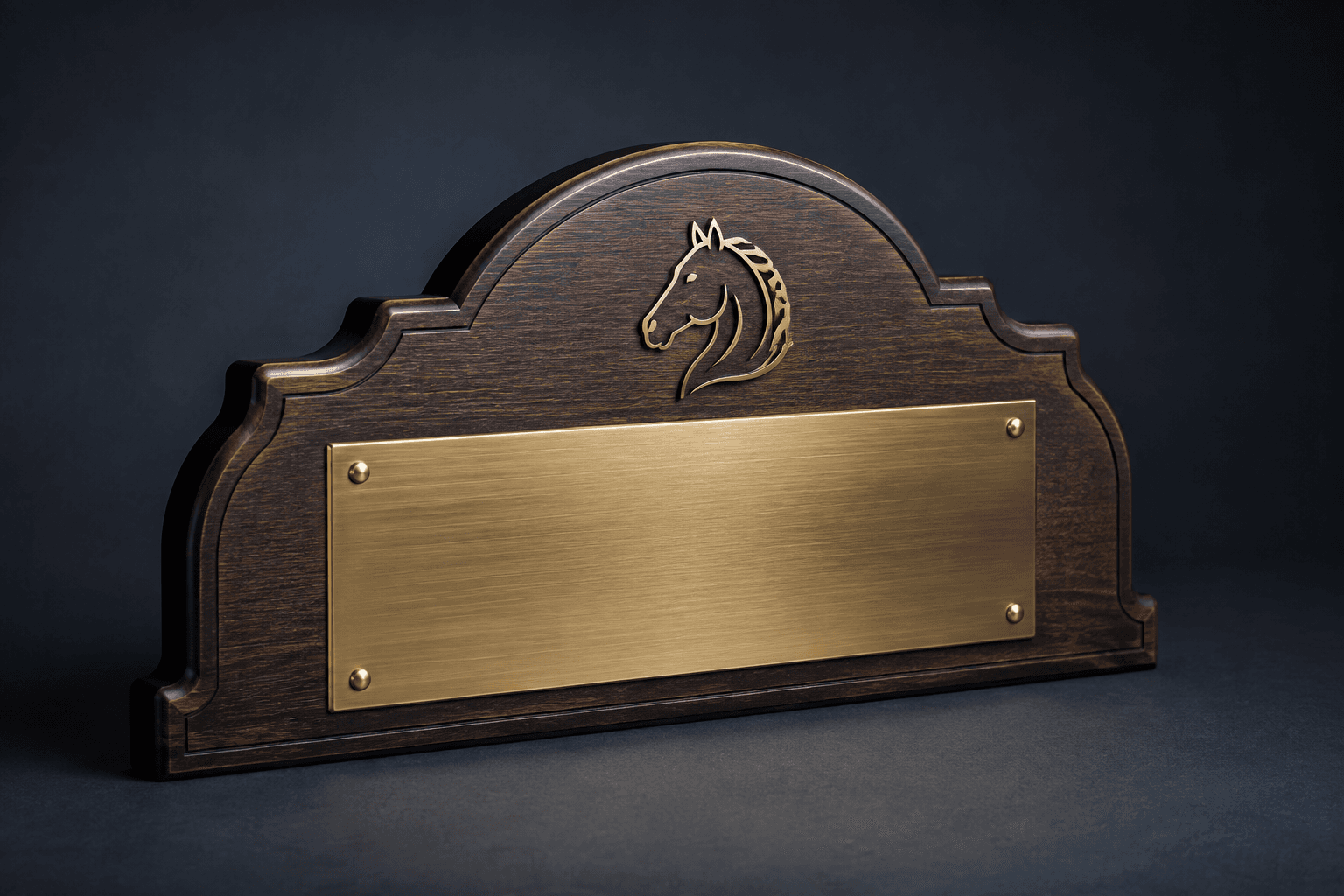
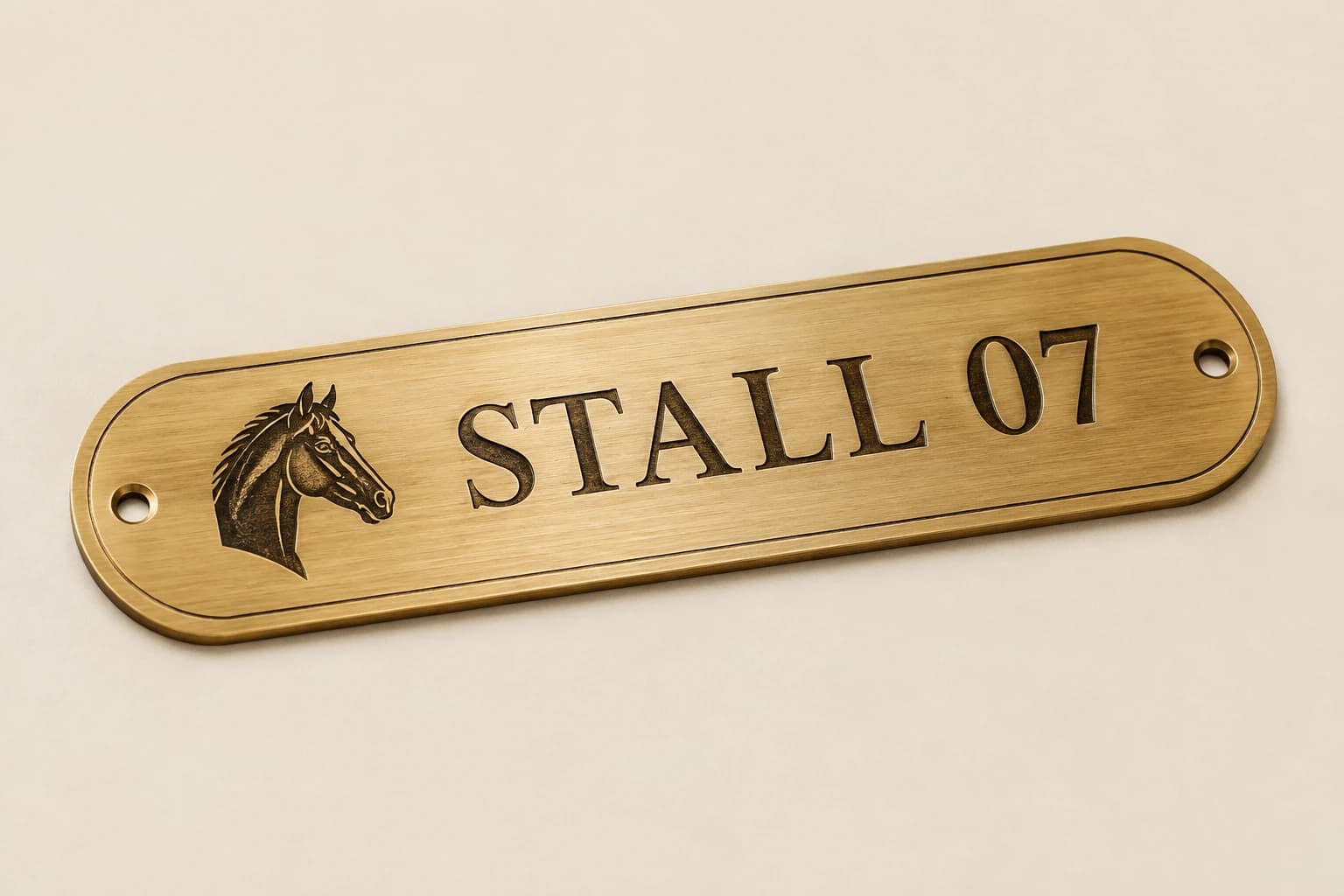
How do you plan how the horse-name component changes?
If horses move regularly, ask for a specific proposal showing which name component can be replaced or transferred. A holder-based appearance does not by itself establish interchangeability. Record the proposed insert dimensions, holder reference and update method for the actual construction.
If the nameplate belongs to the horse’s owner, clarify whether it travels with the animal when leaving the barn. If it belongs to the stable, identify who stores or replaces it. These ownership choices affect the useful count of new plates. A returning horse may already have a compatible approved component, while a new occupant may require one even though the permanent stall number already exists.
SmartEquine describes a stall nameplate supplied with a holder for changing plates.
How do you make the two identities readable without confusion?
Show the location number and horse name together in the intended layout. Ask the barn manager which one staff or visitors should notice first for the sign’s approved purpose. A large decorative name can make a small location number difficult to find, while an unexplained number can be mistaken for part of a registered name.
Use spacing and labels deliberately. If the name is long, review an approved barn-name option rather than shrinking every field. Keep any operational notices or care information in the stable’s appropriate current system. The identification design should make its limited role clear rather than becoming an unreviewed all-purpose information board.
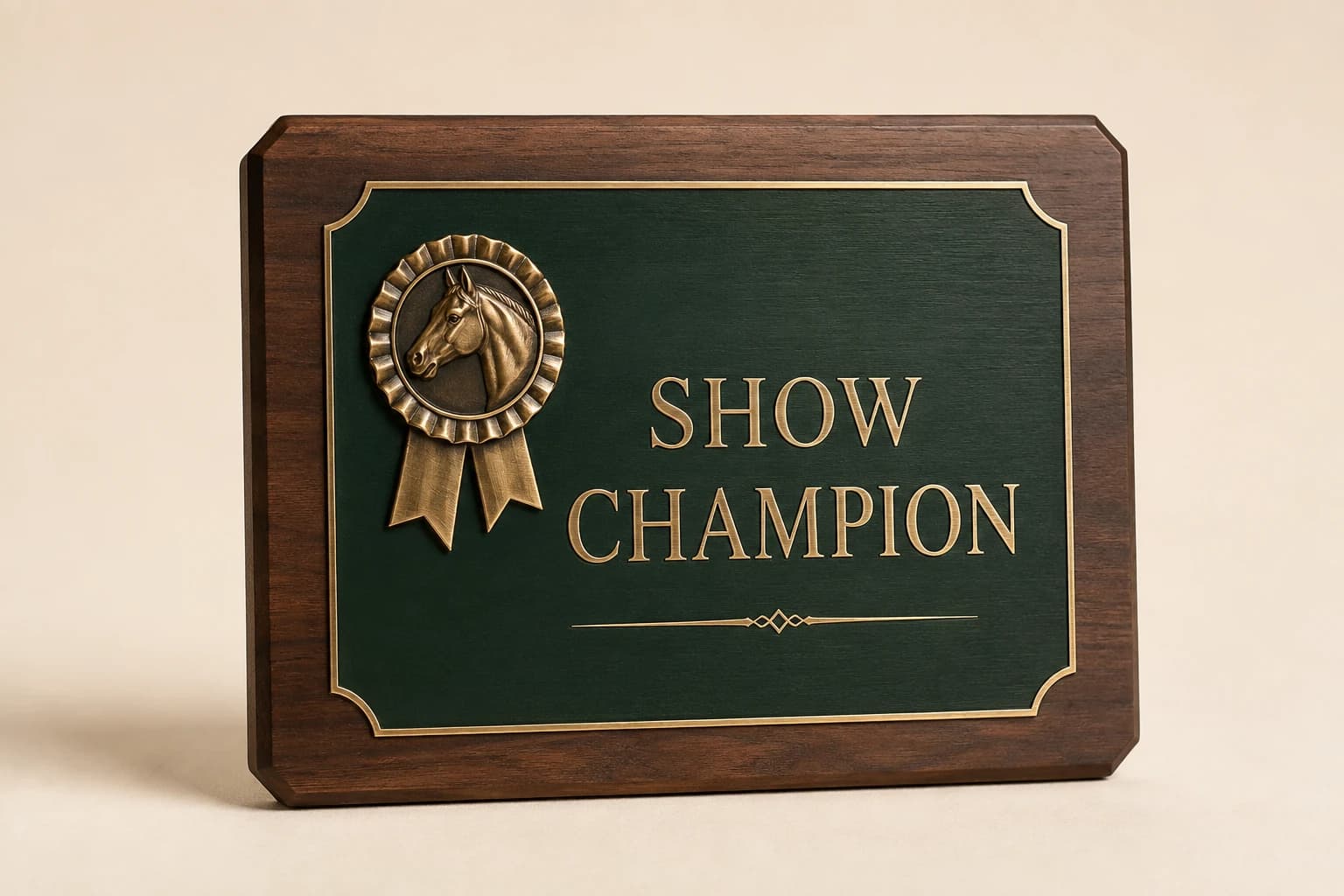
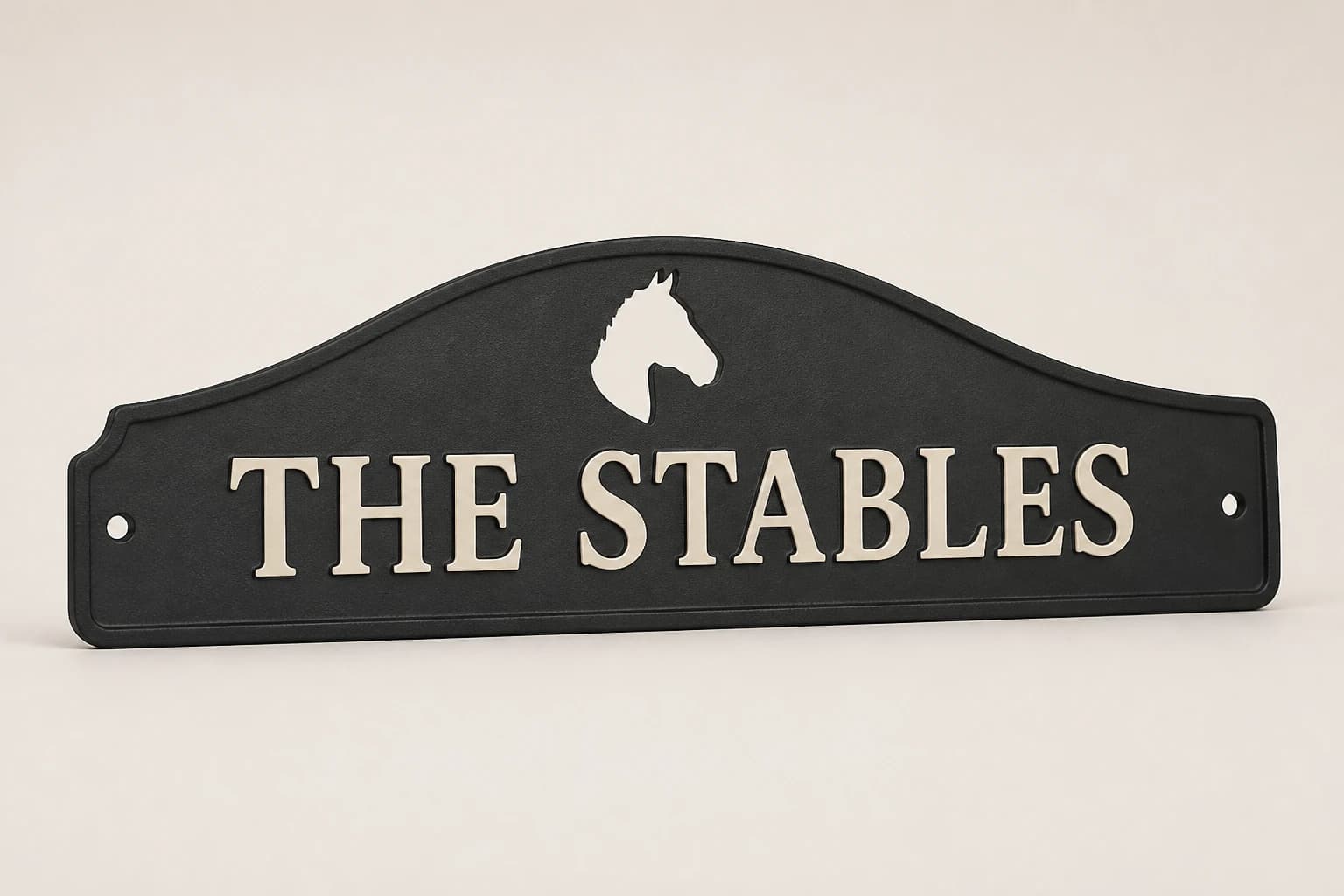
How do you count permanent and changing components separately?
A barn may need numbers for every stall but horse-name plates only for current occupants. Count those groups independently and then add any explicitly approved shared-area signs. Do not multiply the total stall count by two unless every stall is actually receiving both components.
Existing usable numbers, retained horse plates and empty stalls can all change the purchase schedule. Record whether a blank insert is a purchased component or merely an empty position in the holder. The calculator can total the inputs, but the worksheet should preserve which pieces identify locations and which identify animals. A correct combined number is not a substitute for that distinction.
Plan horse names versus permanent stall numbers
Load the fictional example, then replace its inputs with the reviewed details for your project.
Method: Multiply the entered units by physical pieces per unit, then add explicitly entered additional pieces and spares. Quantities do not establish eligibility, fit or product inclusions.
Build your plan
Count shared spaces separately. Record changing animal names, mounting dimensions and exposure conditions before requesting a quote.
Use the article’s example files
Sample rows are illustrative and are not production instructions. Replace their assumptions, keep private records separately and complete the approval fields before using the sheet for a real order.
How do you describe the actual holder and barn conditions?
Provide the proposed supplier with the existing interface, intended location and conditions the barn manager wants considered. Include relevant dimensions, exposure and routine cleaning context without assuming a material is suitable because another product photograph shows a stable. Ask the responsible manager and appropriate specialist to review placement or attachment questions for the actual environment.
Do not prescribe a universal fastening method or place a component where an animal-handling concern has not been assessed. A practical brief explains the sign’s purpose and conditions so the construction can be proposed against them. Decorative style can then be considered without hiding unresolved fit or placement decisions.
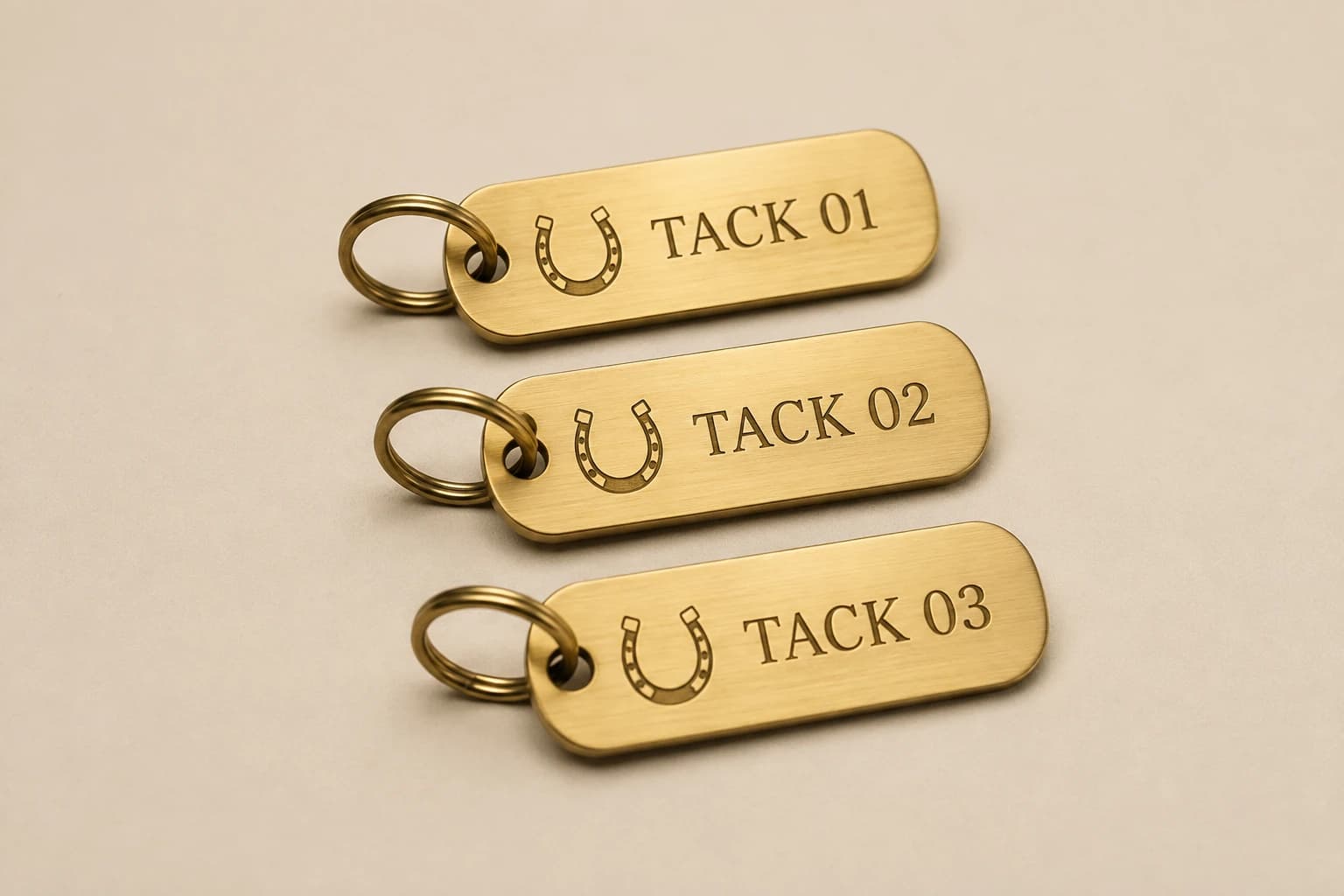
How do you keep the sign schedule current when an occupant moves?
Record a move against the permanent stall identifier and the horse’s existing identity record. If the nameplate transfers, update the location mapping without ordering a new permanent number. If a new plate is needed, retain the approved spelling and component reference.
Ask staff to account for removed plates so they are not mistaken for available blanks or discarded without the owner’s knowledge. After the change, compare the physical display with the current occupancy record. The order is useful when the right name reaches the right location, not merely when the purchased pieces arrive. A stable identifier system should make a routine move easier to explain and carry out.
How does the illustrative horse names versus permanent stall numbers example work?
A fictional barn has ten stalls and seven current horses. It needs ten new permanent number plates and seven horse-name inserts, with no shared signs or spares. The purchase is seventeen components. Three empty stalls still receive numbers, while their future horse names remain unassigned.
The numbers and names are separate rows in the worksheet. Enter ten stalls at one permanent number plate each, seven additional horse-name inserts and zero spares. Ten plus seven equals seventeen physical components. The worksheet keeps the seven current occupants separate from the ten permanent locations. If a horse moves between these stalls, that does not automatically require another number plate. Review the name insert’s actual transfer or replacement process before changing the purchase count.
Permanent stall number or Horse-name component: which fits this order?
Choose this to identify a fixed barn location through changes in occupancy. Choose this to identify an animal with an approved display name and a defined update process. Will the identifier remain meaningful when the stall is empty or a different horse moves in?
| Option | Permanent stall number | Horse-name component |
|---|---|---|
| Best reason to choose it | Choose this to identify a fixed barn location through changes in occupancy. | Choose this to identify an animal with an approved display name and a defined update process. |
| Main review question | Will the identifier remain meaningful when the stall is empty or a different horse moves in? | Who owns the nameplate, and can it transfer or be replaced under the actual construction? |
| What to specify | Specify the approved number or location code, placement and any existing component to retain. | Specify exact name text, current location mapping, holder compatibility and the intended update owner. |
| Later change | Keep the approved wording and component reference so any later revision can be requested against a known record. Do not assume a photograph alone can recreate the original. | Record which parts remain the same and which would be replaced or updated. Ask for a specific later-change proposal rather than relying on an unconfirmed assumption of interchangeability. |
What should you confirm before ordering?
These Stable Name Studio answers address horse names versus permanent stall numbers. Confirm the final wording, component scope and receiving plan in the written proposal. The illustrative worksheet explains the planning calculation; it does not approve the production design or replace the reviewer responsible for this order.
What affects the cost of stall numbers and horse-name plates?
Ask Stable Name Studio to quote the physical components separately: permanent numbers, changing name inserts and any new holders or shared signs. Dimensions, personalization, construction, packing and shipping affect the scope. Existing usable components should be identified before the purchase count is set. Confirm any design minimum rather than assuming every stall needs a complete new assembly.
Should the horse name replace the permanent stall number?
Keep the two identities separate when the barn needs a fixed location reference. A horse can move while the stall remains the same place. The manager should approve the numbering system and current occupancy mapping. A decorative nameplate should not become the sole record of an animal’s location, care or emergency instructions.
What happens to the nameplate when a horse moves?
Confirm whether the plate belongs to the owner or stable and whether the actual construction permits a reviewed transfer. A new location does not automatically require a new permanent number. Retain the exact name and holder reference, then update the mapping so the physical display agrees with the barn’s current record.
Do empty stalls still need their numbers?
They can retain permanent location identifiers under the barn’s approved system even when no horse-name insert is present. Capacity and occupancy are different records. Do not renumber surrounding stalls just to remove a gap in the current horse list. Ask the manager to confirm any change to the location scheme before ordering.
Can a nameplate also carry feeding instructions?
Keep operational care information in the stable’s appropriate current system unless the responsible staff separately specify and control that information display. This guide concerns identification components. A decorative plate should not imply that it contains every current instruction, and an engraved name should not be treated as an animal-care decision.
Sources and scope
The sources below support the cited technical details. The ordering workflows are editorial recommendations. Your project specification, price and schedule are established in the written quote and approved proof.
- SmartEquine: Stall Nameplate - Plastic · checked 2026-09-05
Which buying guide should you read next?
All buying guidesFor worldwide Stable Name Studio orders, give the registered name and barn name distinct roles, then proof both in the exact layout the horse owner approves.
For worldwide Stable Name Studio orders, count permanent stall identifiers, current horse plates and deliberately purchased blanks separately when the barn has empty stalls.