Stable Name Studio · buyer guide
Equestrian keepsakes and working stable signs compared
For worldwide Stable Name Studio orders, choose an equestrian keepsake for personal remembrance or achievement, and a working stable sign for a defined identification task. An equestrian keepsake may celebrate a horse, rider or approved occasion, while a working stable sign helps a reader identify a place or animal in a specific barn arrangement.
Reviewed 2026-09-05 · AI-assisted editorial review. General buying guidance; illustrative scenarios are not customer case studies. Images are AI-generated concepts.
Decide which job the piece should perform before choosing its decorative style. A personal plaque can prioritize a photograph or dedication; a location sign needs the approved identifier to remain clear in its intended setting. Do not treat one as a substitute for the other merely because both display a horse name. If the organizer wants both, give them separate briefs and owners. The design should preserve the distinction between a personal object and a component in the stable’s identification system.
How do you write the keepsake around an approved personal story?
Ask the owner which name, image and occasion they want remembered. A show-related piece should use only an approved result or event description rather than infer an achievement from a trophy motif. A memorial or personal appreciation plaque may need no competitive claim at all.
Keep the exact wording and any dates tied to their meaning. The object can be concise without reducing the importance of the story. If several people contribute messages, have one designated owner approve the final dedication. Longer memories can be placed in a letter or another personal format instead of turning a small keepsake into an unverified biography.
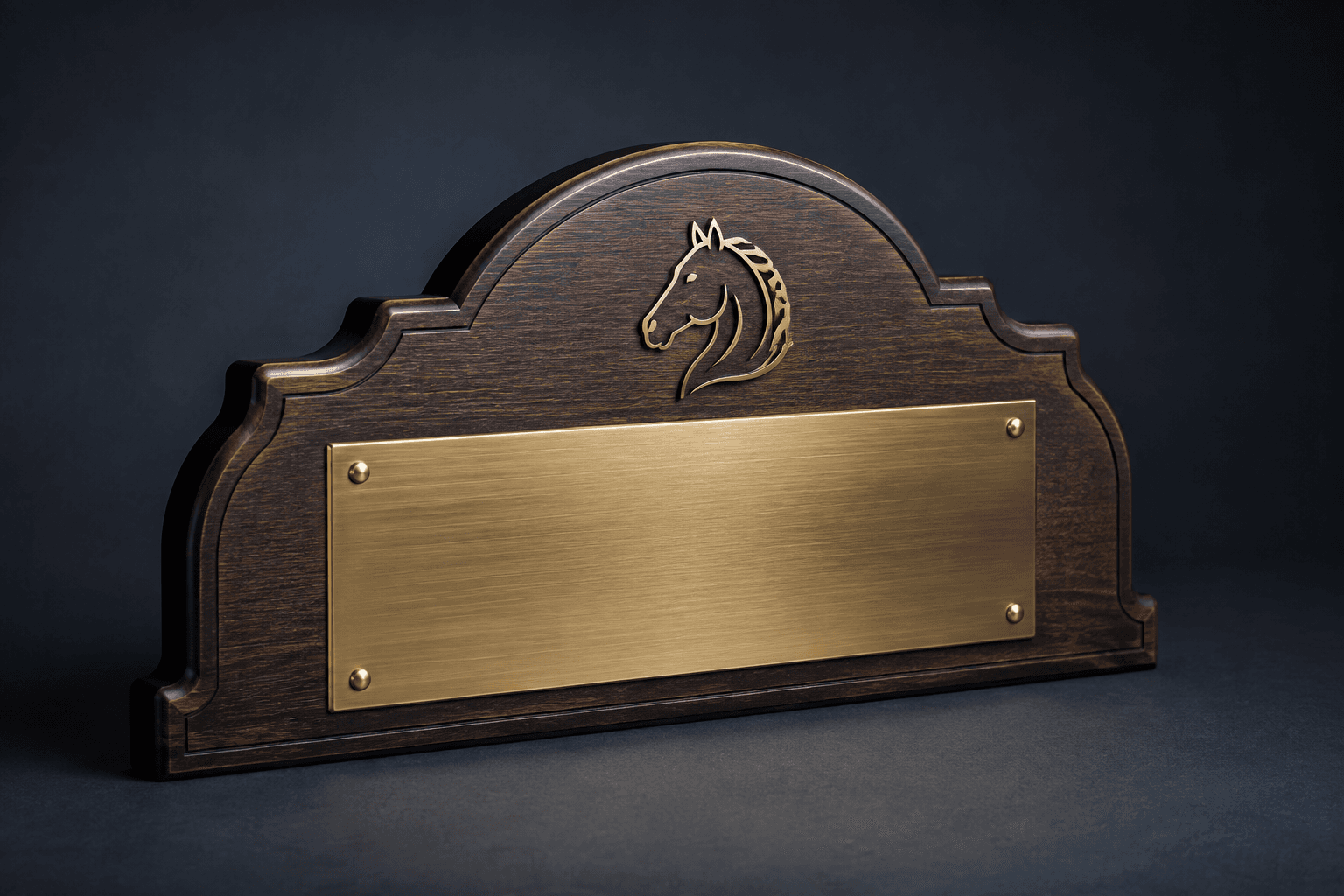
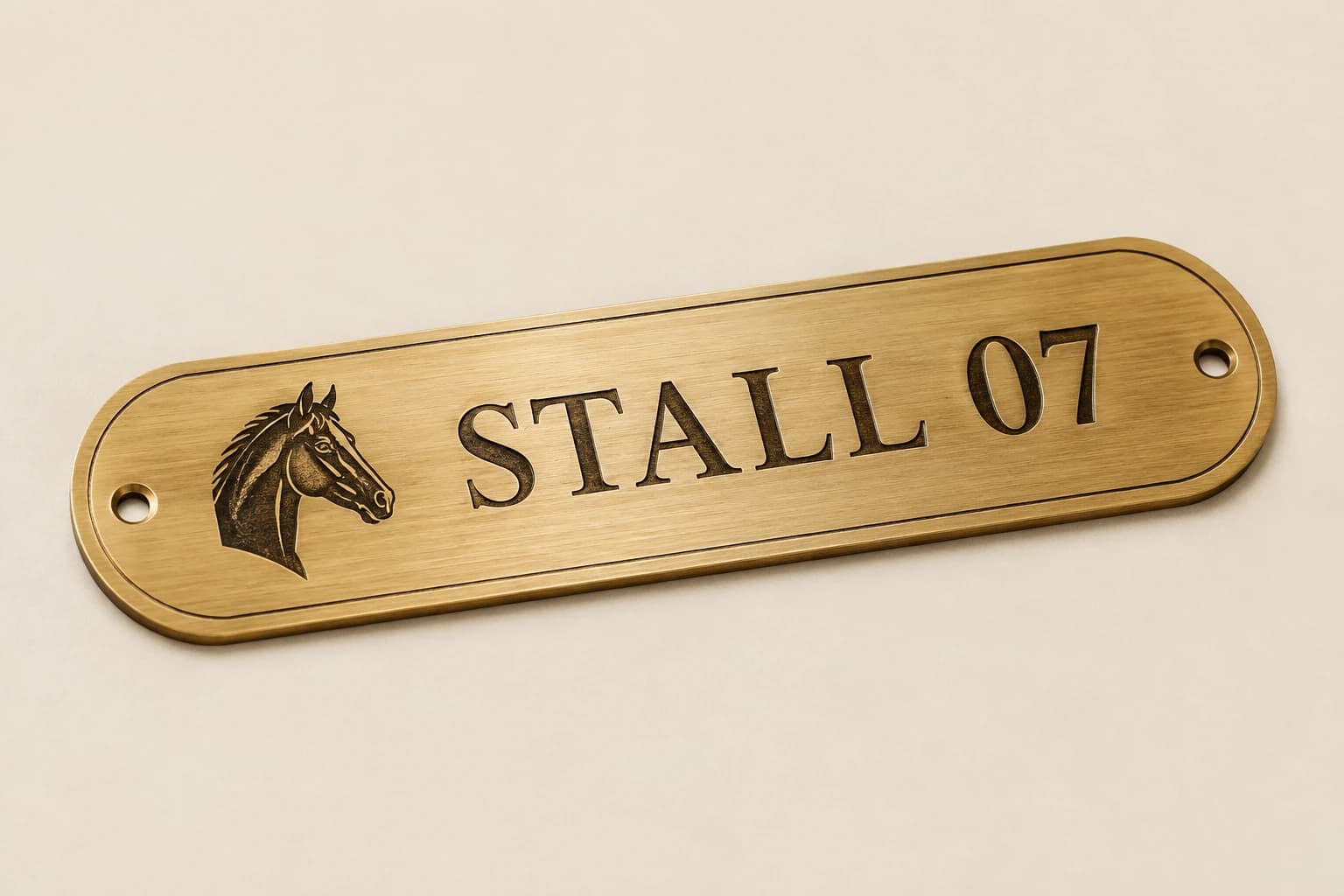
How do you write the stable sign for the actual identification task?
Ask the barn manager what the sign should identify and which record supplies that information. A permanent stall number, a current horse name and a room label are different fields. Keep feeding, medical and emergency instructions in the stable’s appropriate current systems rather than treating a decorative nameplate as a complete operational record.
The sign should not imply that it resolves animal-handling or facility requirements beyond its approved scope. If staff use a particular location code, preserve it consistently. A familiar name may be useful, but it should not obscure the stable’s chosen way of identifying the physical location.
How do you compare display conditions and physical interfaces?
A keepsake may sit on a shelf at home, while a stable sign may use an existing holder in a barn. Describe the actual setting and available dimensions for each. Ask the supplier for the proposed construction against those conditions instead of choosing material from a shared visual theme.
If a holder or installation is involved, provide the measured interface and obtain the relevant project-specific review. A personal display may also need a confirmed support and footprint. Neither category establishes universal durability or fit. The buyer should know what the complete object includes and which placement questions remain outside the supplied piece.
SmartEquine describes a stall nameplate supplied with a holder for changing plates.
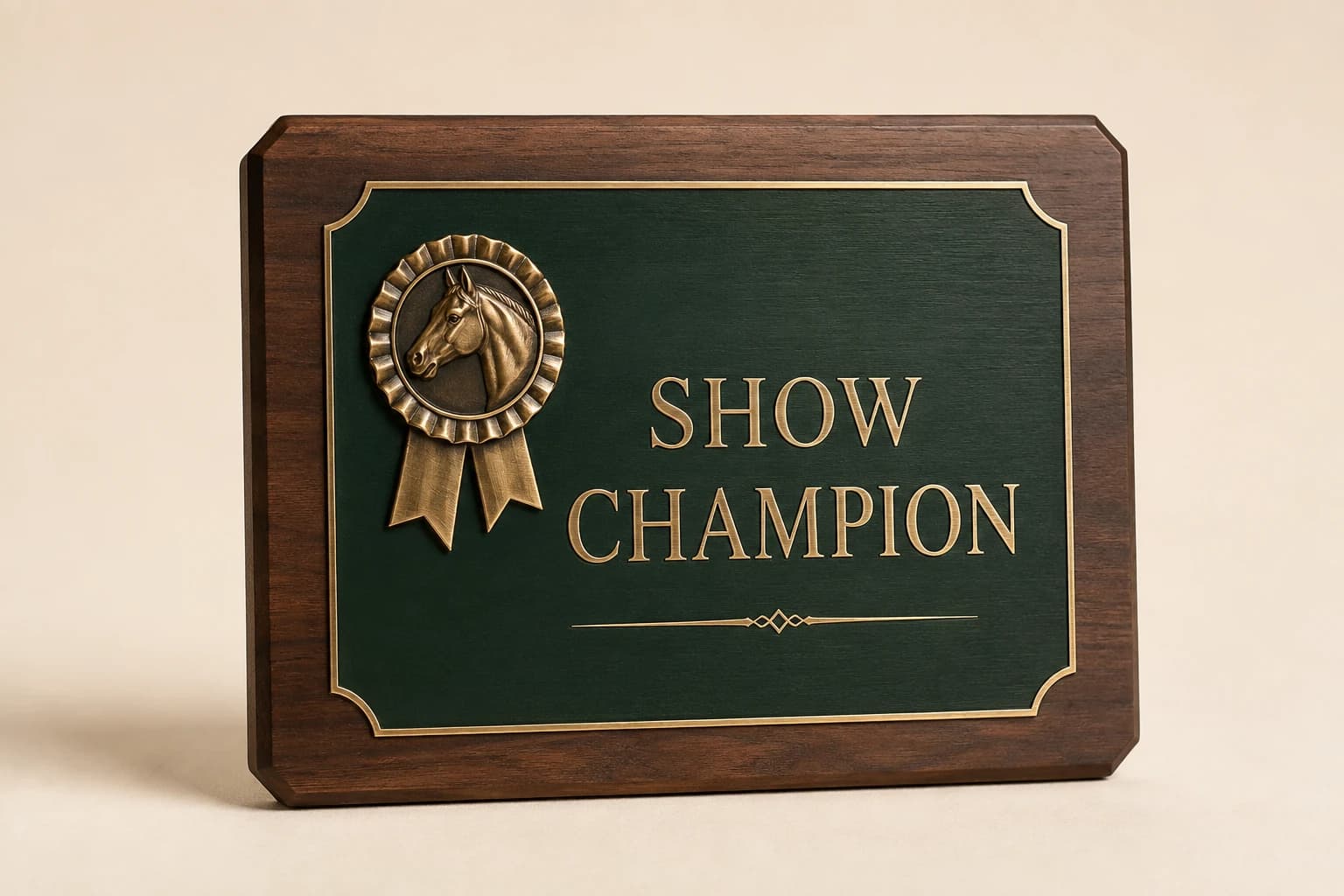
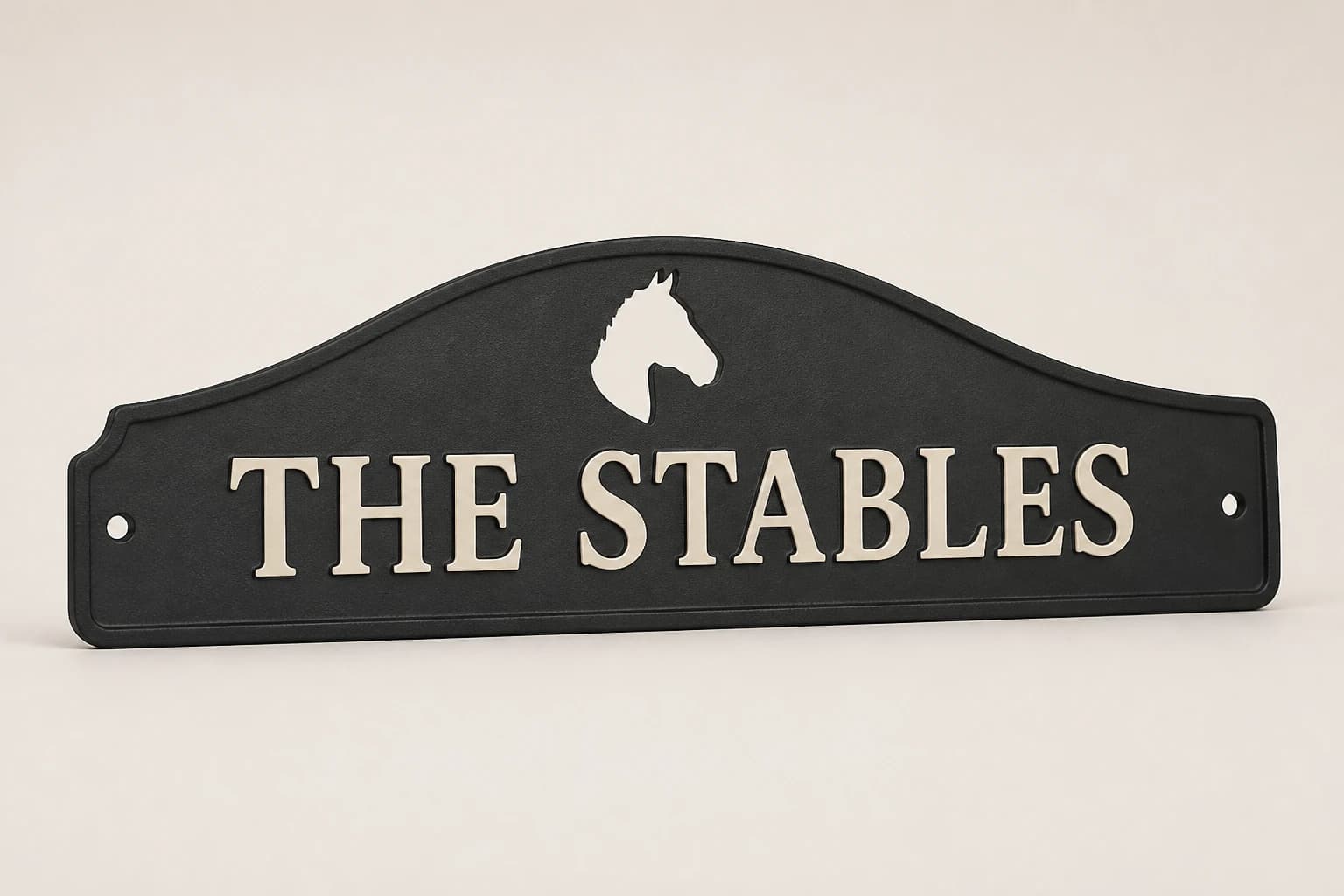
How do you let the artwork hierarchy follow the purpose?
For a keepsake, the owner may prefer an image or dedication to lead. For a stable sign, the identifier may need to take priority over the decorative motif. Show the actual text in each layout before deciding they should look identical.
A common horse silhouette can connect the designs while the name size, spacing and secondary lines differ. If a long registered name crowds a working sign, ask the owner and manager whether an approved barn-name treatment better serves that use. Do not shorten a formal name or add a result line automatically. The visual differences should have a reason tied to the reader’s task.
How do you count personal owners and stable locations separately?
A horse can be associated with several keepsakes and one or more working nameplates. Count the actual objects for each destination rather than using the number of horses as a universal multiplier. A personal gift may go to an owner, a rider or a family member, while a stable component remains with a location or holder.
Record whether a horse-name plate travels with the animal when it leaves the barn. These ownership distinctions affect both the initial order and later replacements. Keep packaging and delivery rows specific enough that a personal dedication is not installed in a working holder or a location component is accidentally handed out as a take-home gift.
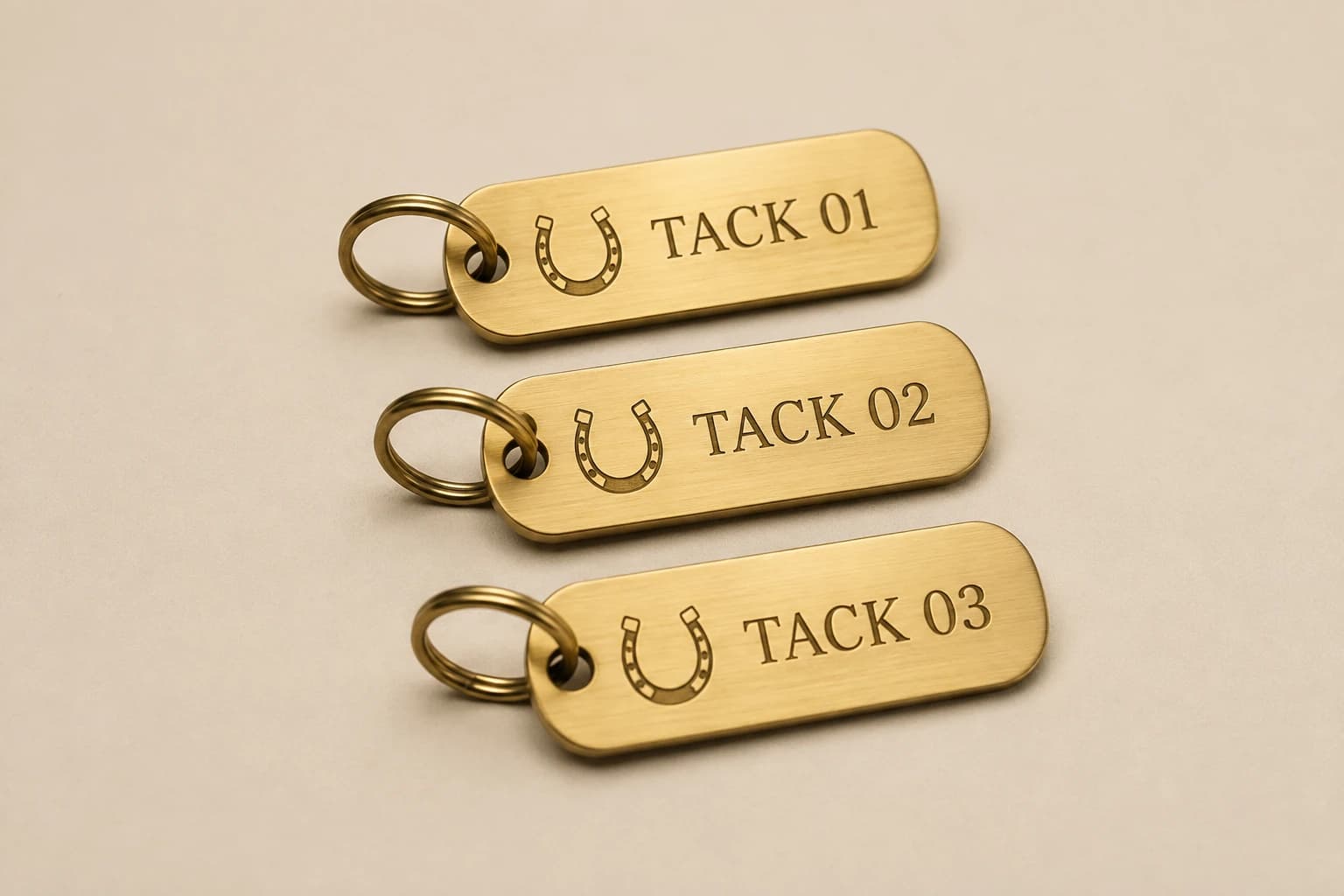
Use the article’s example files
Sample rows are illustrative and are not production instructions. Replace their assumptions, keep private records separately and complete the approval fields before using the sheet for a real order.
How do you keep future updates appropriate to each category?
A keepsake usually preserves an approved historical message, while a working sign may need to change when an animal moves or a location is renamed. Save separate references so a routine stable update does not rewrite a personal remembrance. If a keepsake is copied for another owner, confirm whether the original dedication still fits.
If a stable sign is replaced, check the current location mapping and retained holder dimensions. The two objects can share artwork without sharing every update rule. A clear reorder record explains what the piece does, who owns it and which facts or design decisions should remain fixed when another version is requested.
How does the illustrative equestrian keepsakes and working stable signs compared example work?
A fictional owner requests two personal horse keepsakes for family members and five working nameplates for an approved stable arrangement. The total is seven objects, but the personal and working pieces use separate proof groups. The keepsakes preserve a selected dedication, while the stable plates follow the manager’s current location schedule.
No show result is invented for either group. Enter two personal keepsakes at one each, five additional working nameplates and zero spares. Two plus five equals seven purchased objects. The worksheet separates personal owners from stable locations, even when the horse name or motif is shared. A later stall move may change a working plate’s location mapping without changing either keepsake’s historical dedication. The quantity calculation does not establish that the two product groups share the same dimensions or construction.
Optional calculation: Plan equestrian keepsakes and working stable signs compared
Equestrian keepsake or Working stable sign: which fits this order?
Choose this for a personal owner and an approved remembrance, appreciation or achievement message. Choose this for a defined location or animal-identification task within the barn’s approved system. Does the artwork and wording reflect the intended story without adding an unverified result?
| Option | Equestrian keepsake | Working stable sign |
|---|---|---|
| Best reason to choose it | Choose this for a personal owner and an approved remembrance, appreciation or achievement message. | Choose this for a defined location or animal-identification task within the barn’s approved system. |
| Main review question | Does the artwork and wording reflect the intended story without adding an unverified result? | Is the identifier current, readable and compatible with the actual holder or placement? |
| What to specify | Specify the exact name, occasion, image, dedication and personal display setting. | Specify the location code, name source, measured interface and responsible update owner. |
| Later change | Keep the approved wording and component reference so any later revision can be requested against a known record. Do not assume a photograph alone can recreate the original. | Record which parts remain the same and which would be replaced or updated. Ask for a specific later-change proposal rather than relying on an unconfirmed assumption of interchangeability. |
What should you confirm before ordering?
These Stable Name Studio answers address equestrian keepsakes and working stable signs compared. Confirm the final wording, component scope and receiving plan in the written proposal. The illustrative worksheet explains the planning calculation; it does not approve the production design or replace the reviewer responsible for this order.
How should keepsakes and working signs be quoted together?
Ask Stable Name Studio to separate the personal keepsake and working-sign groups in the written proposal. Their sizes, artwork, text hierarchy, supports and destinations may differ even when they share a horse name. Quote the actual finished pieces and any additional components, with design minimums confirmed, rather than treating every object as an interchangeable nameplate.
Can the same horse motif appear on both products?
A shared motif can connect the designs when it supports both approved purposes. Review the keepsake’s personal message and the working sign’s identifier separately. The same artwork does not establish identical dimensions, material suitability or update rules, and it should not obscure the information the intended reader needs to notice first.
Can a keepsake imply a show result?
Use a specific result or achievement only when the owner supplies and approves that wording. A trophy shape or decorative horse image does not establish a championship. A personal remembrance or appreciation piece can be meaningful without a competitive claim. Keep the occasion and any factual result line distinct during proof review.
Who owns a working stable nameplate?
Confirm that in the brief. It may belong to the horse owner or remain with the stable’s identification arrangement. Ownership affects whether it transfers when the animal leaves and who approves replacements. A personal keepsake has its own recipient, so do not assume both objects follow the same handoff merely because they share a name.
Should a stall move change the personal keepsake?
Usually the two records answer different questions: the working sign follows a current location mapping, while the keepsake preserves an approved personal occasion. Ask the owner before changing the historical dedication. Keep separate proof and component references so a routine stable update does not silently rewrite the personal object.
Sources and scope
The sources below support the cited technical details. The ordering workflows are editorial recommendations. Your project specification, price and schedule are established in the written quote and approved proof.
- SmartEquine: Stall Nameplate - Plastic · checked 2026-09-05
Which buying guide should you read next?
All buying guidesFor worldwide Stable Name Studio orders, keep the stall’s permanent location identity separate from the horse name that may move with its occupant.
For worldwide Stable Name Studio orders, give the registered name and barn name distinct roles, then proof both in the exact layout the horse owner approves.